Explore Crisil, a company of S&P Global
Formerly known as Global Research & Risk Solutions
October 27, 2026
 Blog
Blog
 Share




After several quarters of redemption pressure, perpetual-life non-traded business development companies (BDCs) may finally be approaching an inflection point.
From late 2025 through the first half of this calendar year, retail investors rushed to exit these private credit vehicles amid concerns over higher interest rates, stress in the software sector, elevated payment-in-kind income and rising default expectations.
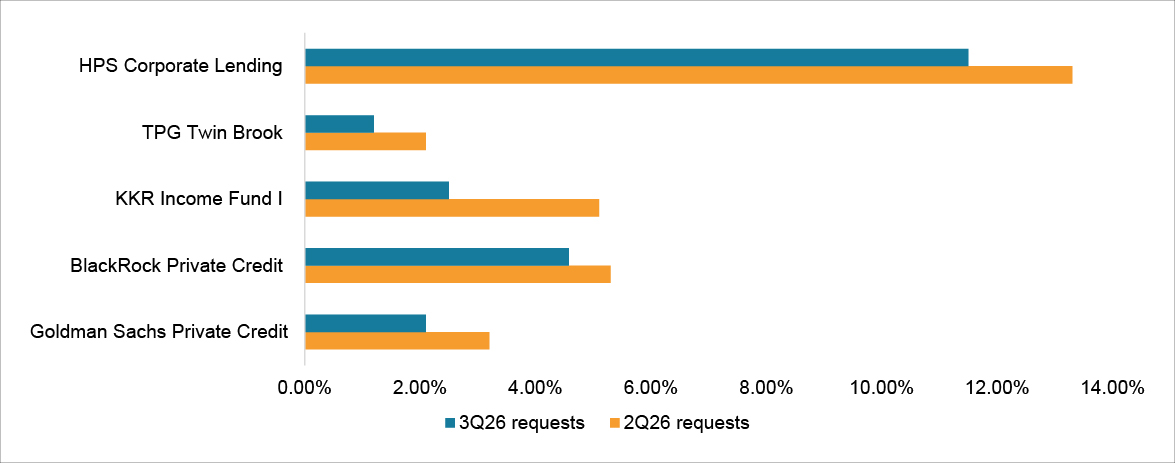
However, data for the third quarter of this calendar year suggests these concerns may be beginning to recede. Headline redemption figures remain high, largely because of a backlog of requests carried over from earlier quarters, but new redemption demand declined at many of the industry’s largest funds.
The flagship retail funds managed by Apollo Global, Ares and BlackRock reported lower redemption requests in the third quarter, while requests at Blackstone’s flagship fund remained unchanged.
This marks a clear departure from the surge seen in the first half of this calendar year and suggests investor concerns over credit deterioration and corporate defaults are moderating. Two factors largely explain this shift:
- Portfolio resilience
- Improving macro conditions
Latest data points to a turnaround
The decline in redemption requests in the third quarter was broad-based rather than confined to a single fund, suggesting a segment-wide trend rather than an isolated development.
Understanding the phantom backlog effect
Many perpetual-life BDCs operate with quarterly repurchase limits. When redemption requests exceed these caps, unfulfilled requests may be carried over into subsequent quarters. Consequently, headline redemption figures in the first half of this calendar year reflected not only fresh requests but also a backlog accumulated from previous quarters.
The moderation in the third quarter suggests a considerable portion of this backlog may now be clearing, while underlying redemption demand is easing.

Portfolio resilience helps rebuild investor confidence
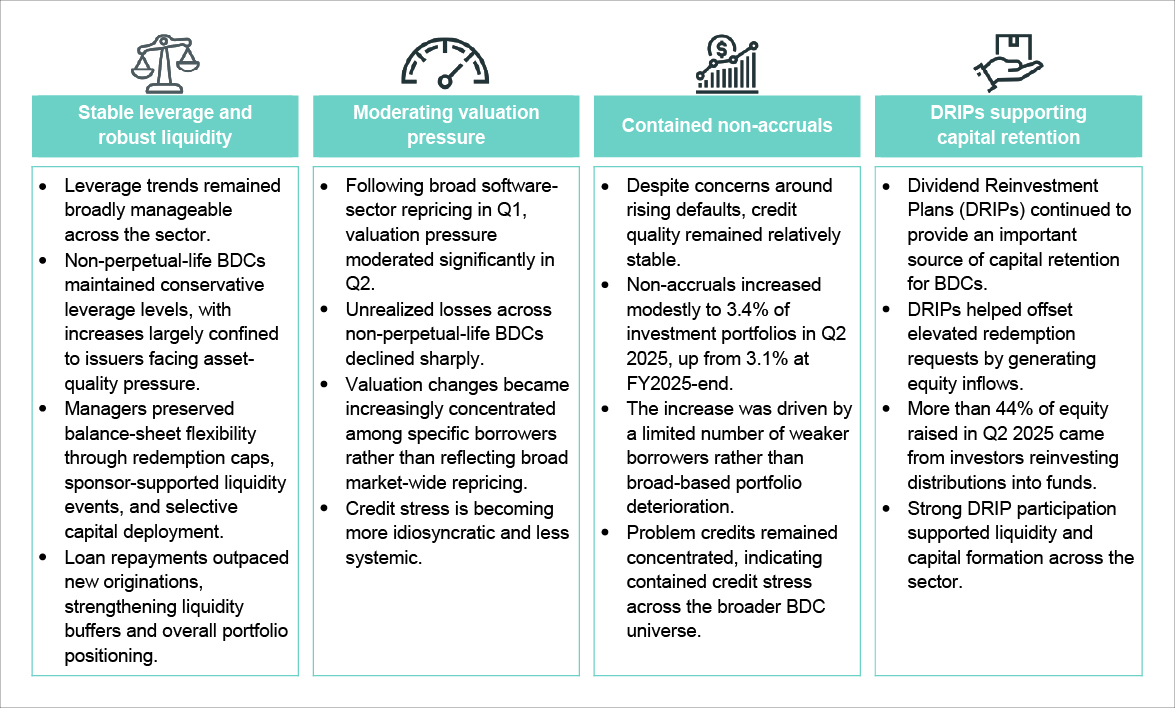
Investor concerns over credit quality intensified redemption pressure, but most fund managers navigated the challenging environment through disciplined portfolio and liquidity management. Stable credit performance, coupled with an increase in mergers and acquisitions (M&A)-related realisations, helped ease these concerns and support a recovery in investor confidence.
Several indicators point to improving resilience across the BDC sector:
M&A recovery adds to a more supportive operating environment
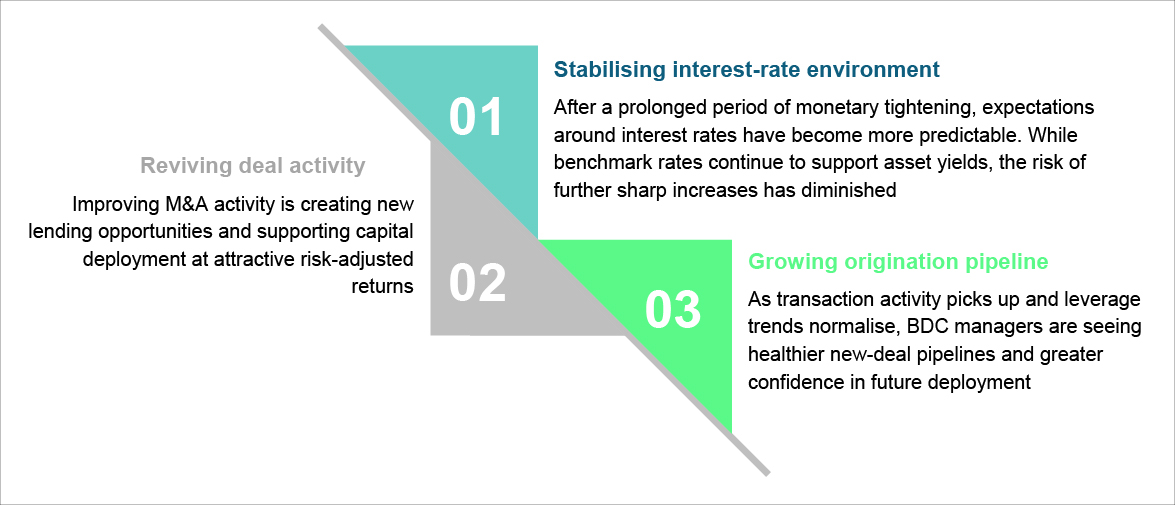
Portfolio resilience has helped contain credit concerns. At the same time, recovering M&A activity and a more stable interest-rate environment are improving the backdrop for deployment and liquidity generation. As base rates stabilise, managers are balancing pressure on net investment income against improving origination opportunities and stronger capital recycling.
From liquidity management to selective growth
Redemption activity is likely to remain elevated in the near term as legacy requests continue to be processed, but the underlying trend is becoming more favourable. The decline in fresh redemption requests suggests investor concerns about private credit are easing, while the gradual clearing of the backlog should make headline redemption figures more reflective of underlying demand.
This could mark an important transition for the sector. After several quarters dominated by redemption management, liquidity preservation and defensive portfolio positioning, perpetual-life BDCs may gradually regain the flexibility to focus on capital deployment and selective growth.
Three indicators will be critical in determining whether the improvement is sustained: a) continued moderation in fresh redemption demand, b) stability in non-accrual levels and c) further recovery in M&A-related activity. If these trends persist, managers could increasingly shift their focus from defending the balance sheet to deploying capital and expanding portfolios.
A return to the rapid fundraising environment of earlier years may take time. Nevertheless, the third quarter of this calendar year could represent an early inflection point, with the sector moving from managing redemption pressure to rebuilding investor confidence and, eventually, pursuing growth.