Explore Crisil, a company of S&P Global
Formerly known as Global Research & Risk Solutions
January 20, 2026
 Blog
Blog
Banning institutions from buying homes
January 20, 2026
Blog
Blog
What Trump’s proposal could mean for the markets
 Share


US President Donald Trump’s proposal to make home prices affordable by banning institutional investing in single-family homes is likely be bear fruit only in certain areas as such institutions have a small national share in the housing market.
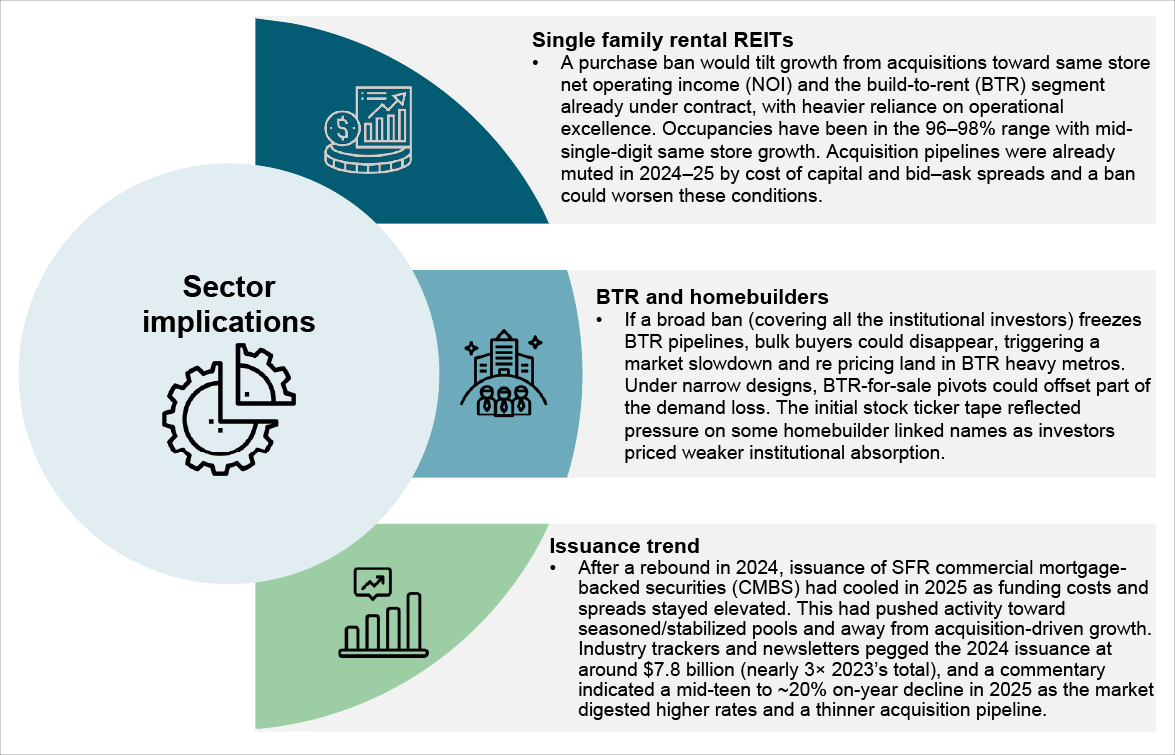
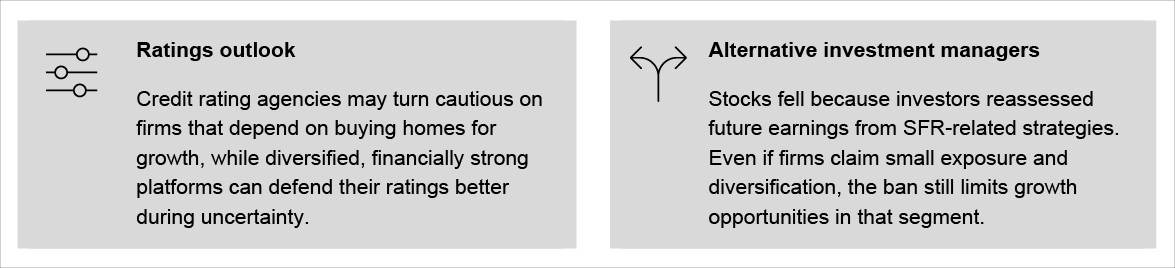
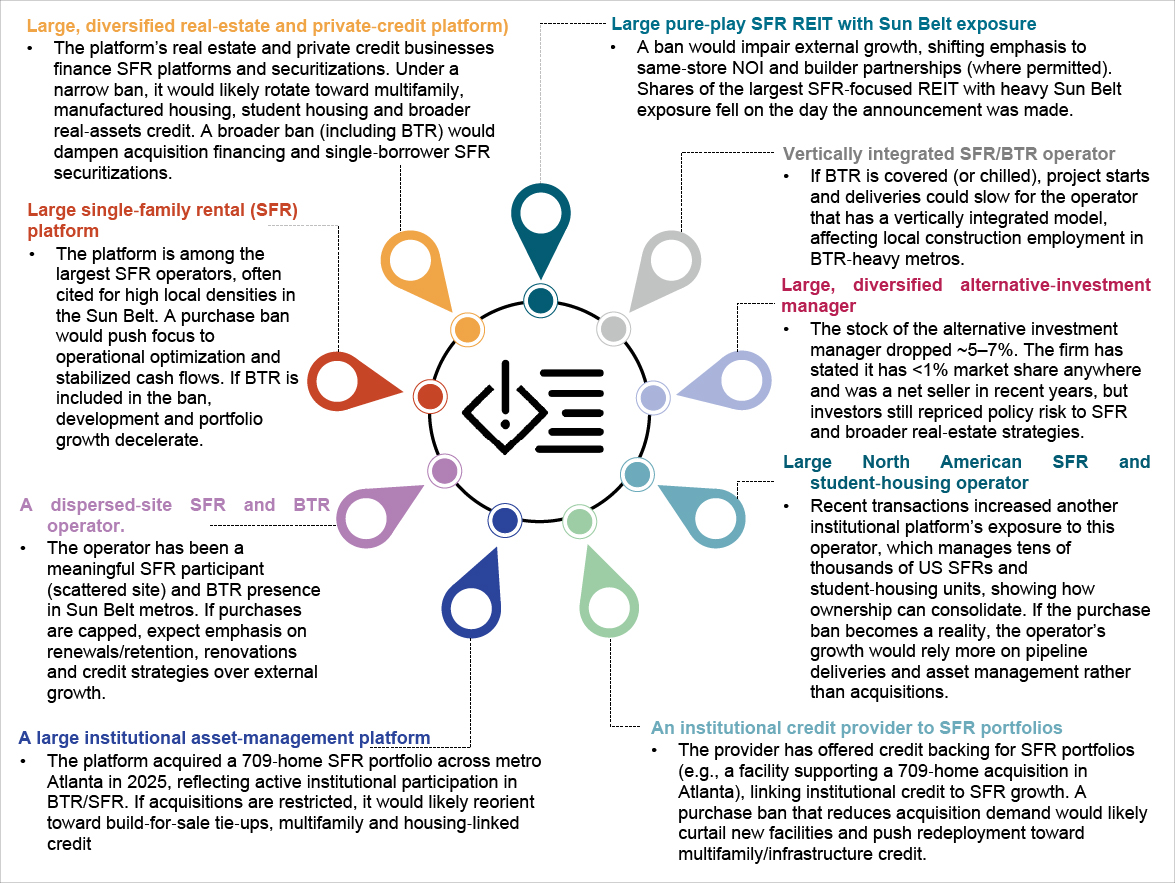
Housing linked equities, however, fell after Trump announced on January 7 that he was “immediately taking steps to ban large institutional investors from buying more single-family homes” and would ask Congress to codify the measure. Within hours of the announcement, major single family rental operators and publicly listed home leasing institution saw their stock prices fall by roughly 6–7%, while large diversified alternative investment institution with exposure to single family rentals dropped 5–7%, reflecting investor concerns about slower external growth and greater regulatory uncertainty.
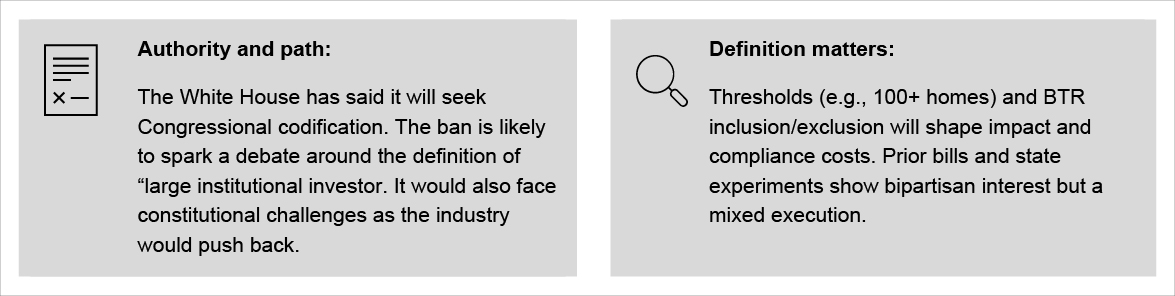
Some national news outlets have pointed out that it was not clear if a federal purchase ban can be imposed without the approval of the Congress, raising immediate questions around authority, property rights and interstate commerce.
The US President promised to share more details at the World Economic Forum in Davos later this month.
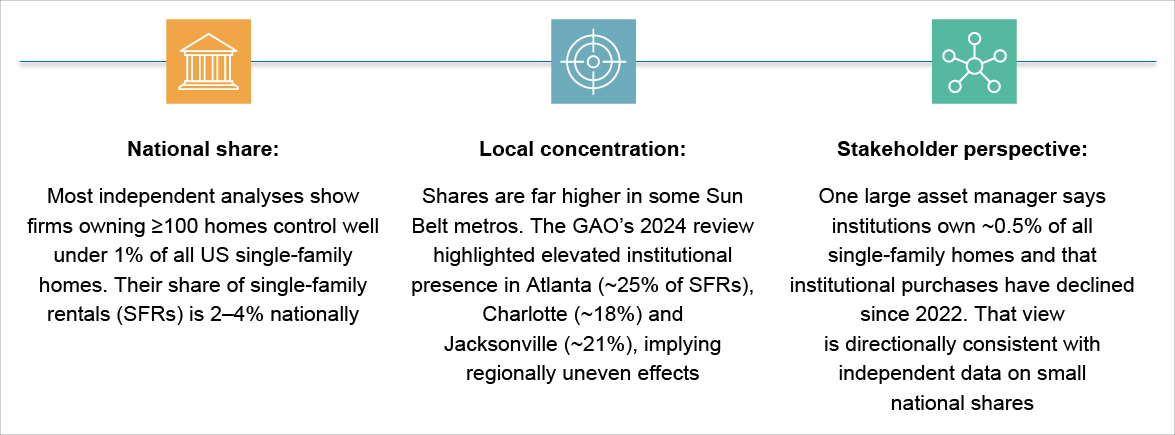
Institutional footprint: Meaningful at the local level
Large institutional investors who buy single-family homes do not have a sizable pan-US presence, but they have a sizable footprint at the ZIP code level, according to studies by the US Government Accountability Office (GAO) and the American Enterprise Institute. The ban could have a material impact in places where institutional concentration is high.
Sector implications: From REITs to ratings
Implications
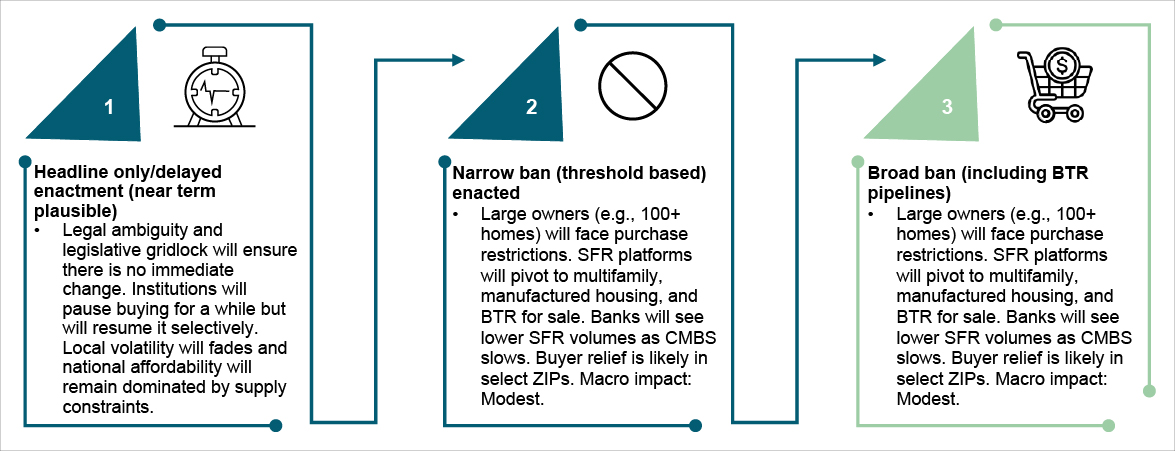
Should the ban be codified, expect further pressure on SFR securitizations—slower issuance, tighter underwriting, fewer single-borrower deals and repricing of warehouse and term lines to reflect reduced acquisition growth.
Affordability: Local vs national
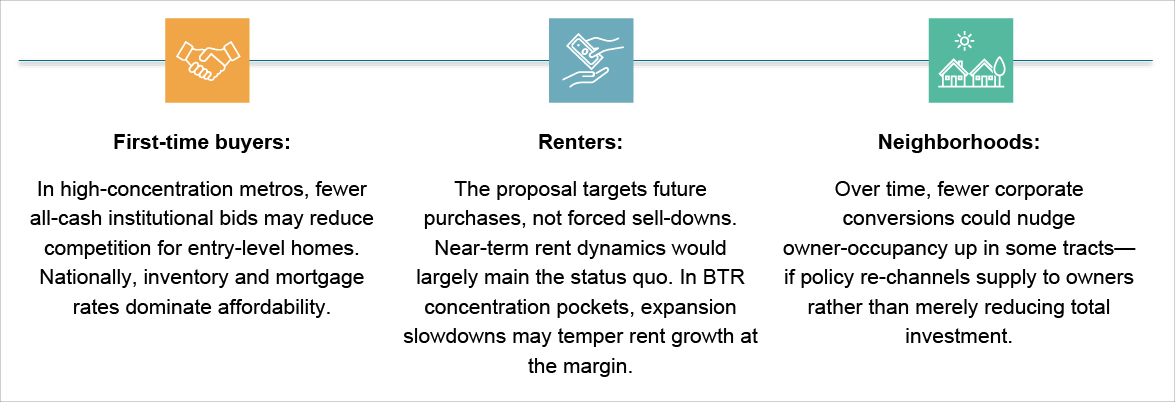
The GAO has said institutional investment can raise rents and prices where concentration is high. Restricting institutional purchases could moderately ease bidding pressure for entry level homes and cool rent growth at the margin in those pockets. In Atlanta, for example, elevated institutional shares and documented local impacts suggest visible local relief is plausible if institutional bids are fewer.
Nationally, however, experts state that affordability hinges on supply (zoning, permitting, density) and mortgage lock in, which such a buyer ban doesn’t directly fix. Removing a small buyer cohort is unlikely to promote affordability nationally unless there are sustained building and permitting reforms.
Who could feel the pangs
Common people: Buyers, renters, neighborhoods
Legal and policy landscape
What to watch out for
The bottom line
If enacted, the ban would likely deliver meaningful local impact in high concentration metros—less bidding pressure and tempered rent growth at the margins. Nationally, affordability hinges on building more homes, unlocking zoning and easing development bottleneck — structures a purchase ban alone cannot solve.
For investors, this is a growth repricing moment. For banks and ratings, it is a pipeline and exposure story. For buyers and renters, the outcomes will depend on the ZIP code.