Explore Crisil, a company of S&P Global
Formerly known as Global Research & Risk Solutions
April 21, 2026
 Blog
Blog
Manager selection pivotal to success in private credit
April 21, 2026
Blog
Blog
Top ones fare consistently on returns, objectives
 Share



Private credit has become an increasingly popular asset class among investors seeking higher yields and diversification. However, the performance of these investments remains heavily dependent on the skills and expertise of the private credit manager.
In this blog, we explore the importance of manager selection in private credit as well as the challenges and the key components of the selection process.
Why manager selection is critical in private credit
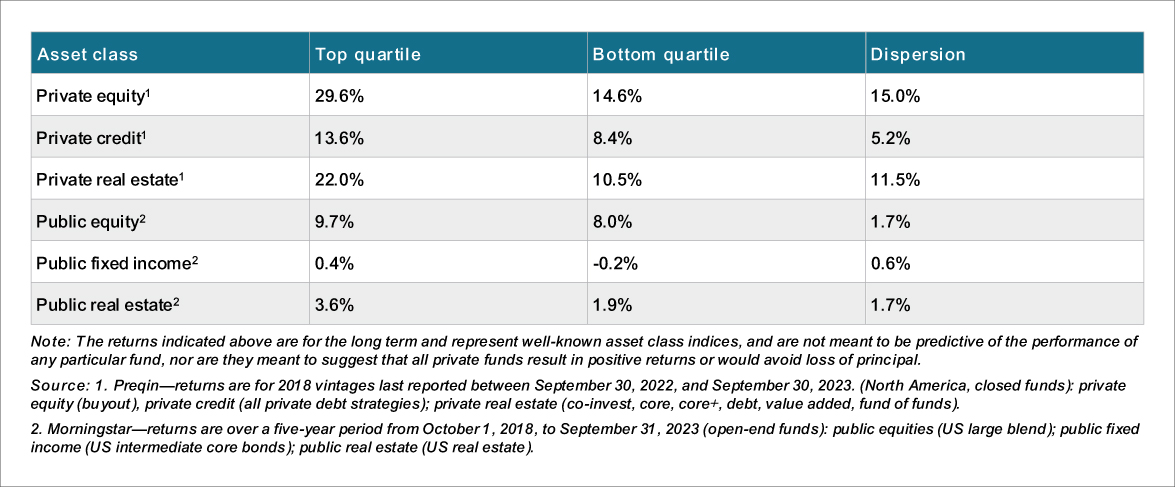
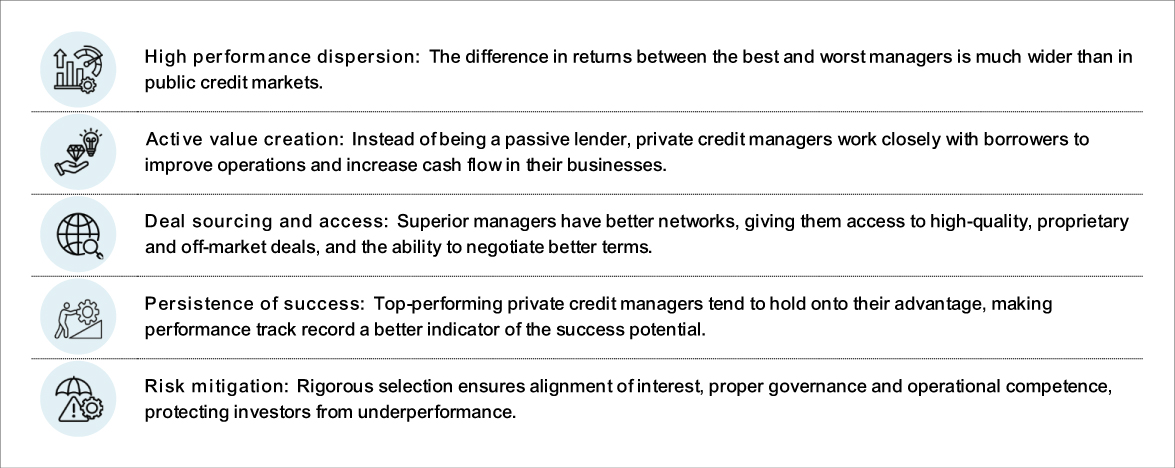
The performance dispersion is substantial in private credit, with top-quartile managers consistently outperforming their peers.
According to Preqin, the gap between top- and bottom-quartile private credit managers can be as high as 5.2 percentage points1 in annual internal rate of return, highlighting the critical role of manager selection in private markets.
There are several reasons why manager selection is crucial in private credit:
1 Returns are for 2018 vintages that have last reported between September 30, 2022, and September 30, 2023; (North America, closed funds); private credit (all private debt strategies). Please see annexure for more details.
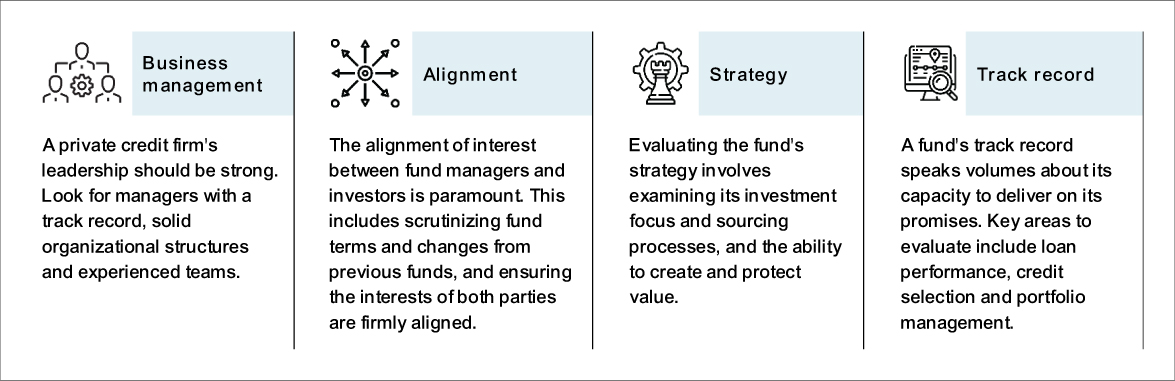
The four pillars for manager selection
When evaluating private credit managers, investors should focus on four key criteria: Business management, alignment, strategy and track record. Each metric provides critical insights into the potential of a fund and its ability to generate consistently high returns over time.
Challenges in manager selection
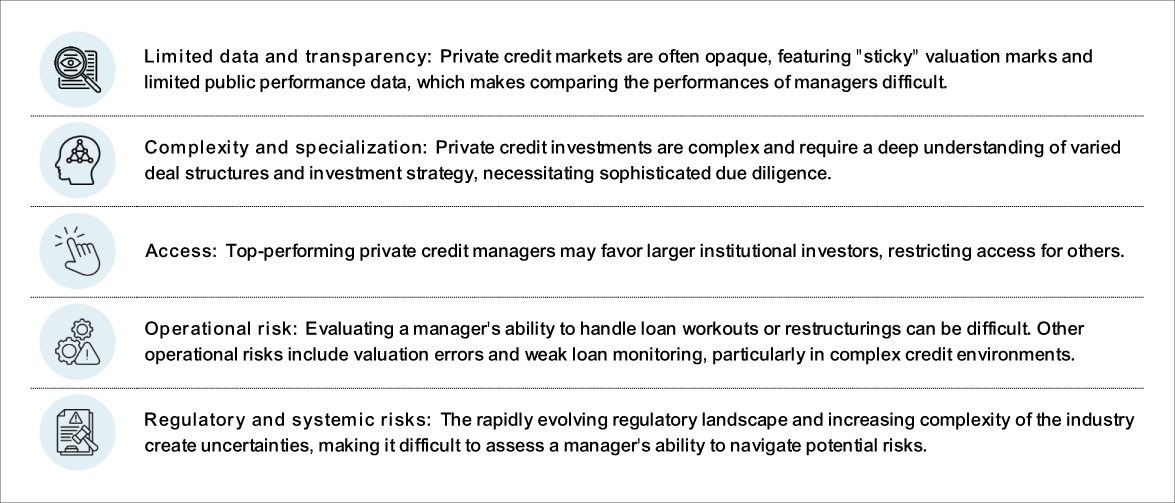
While manager selection is critical in private credit, it faces hurdles due to limited and opaque data, high structural complexity and restricted access to top-tier managers. Successful selection, therefore, requires due diligence into underwriting, as performance is driven by loan monitoring rather than market movements.
The key risks include:
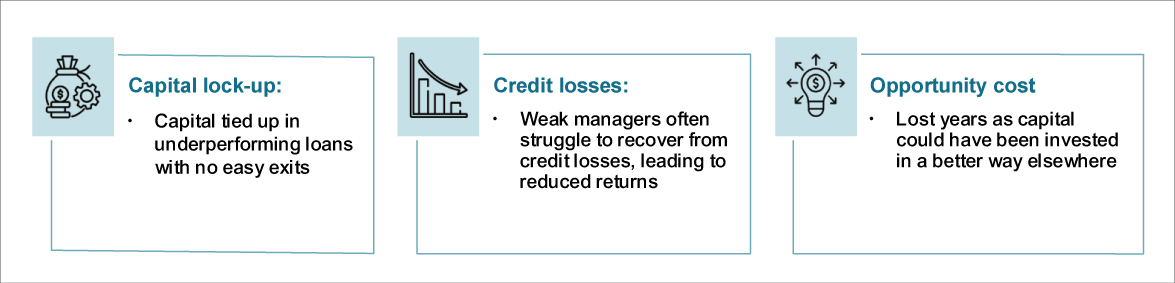
The cost of the wrong partner in private credit
A misstep in manager selection can mean:
Path to success in investing
When investing in private credit, selecting the right manager is crucial to generating attractive returns and achieving investment objectives. A top-performing private credit manager must possess a proven underwriting approach, a differentiated deal origination strategy and a sufficient capital base. To identify such a manager, investors should conduct thorough due diligence, evaluate alignment of interests, assess operational capabilities and risk management processes, and monitor performance over time.
By following these best practices and understanding the challenges of manager selection, including operational, regulatory and systemic risks, investors can make informed decisions and navigate the complexities of private credit investing to achieve success.
Annexure