Explore Crisil, a company of S&P Global
Formerly known as Global Research & Risk Solutions
March 05, 2026
 Blog
Blog
Blog
 Share
Share


SASB issuances gain currency
With structured finance in commercial real estate (CRE) evolving, single-asset single-borrower (SASB) commercial mortgage-backed securities (CMBS) are gaining currency in the sector.
These transactions, often backed by iconic assets like hotels, office buildings and logistics parks, demand high precision, transparency and timely data management.
As SASB issuance grows globally, so does the complexity of reporting and surveillance.
This has led to the creation of the SASB database.
What is an SASB database: It is a centralized platform that consolidates loan, borrower, property and market data into a single, comprehensive analytics solution. It empowers investors, lenders, servicers and rating agencies to make informed, data-driven decisions.
An SASB CMBS transaction involves a large loan, often exceeding $100 million, backed by a single property or a portfolio owned by one borrower.
Unlike traditional conduit CMBS, which pools risks across many smaller loans, SASB deals focus on concentrated exposures that require detailed monitoring and specialized analysis.
An SASB database captures the full lifecycle of these transactions, organizing the following critical data into a unified framework:
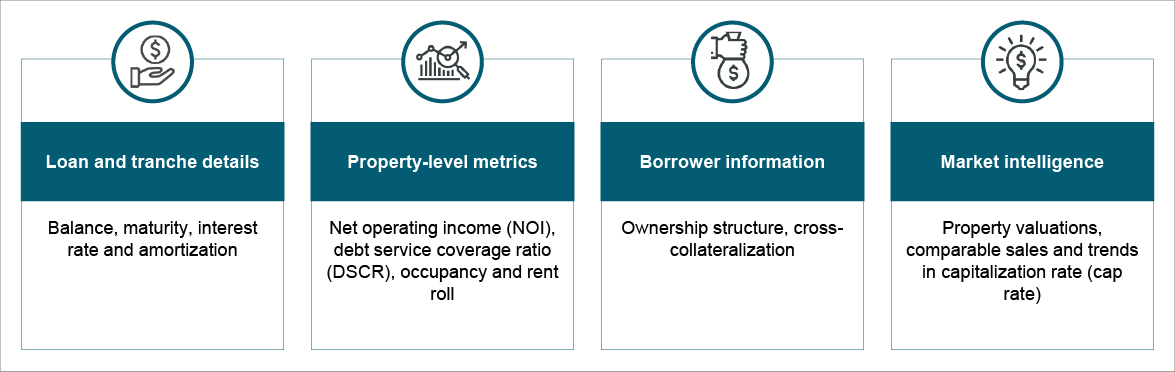
This centralized database transforms fragmented servicer and trustee data into a reliable, analytics-ready resource.
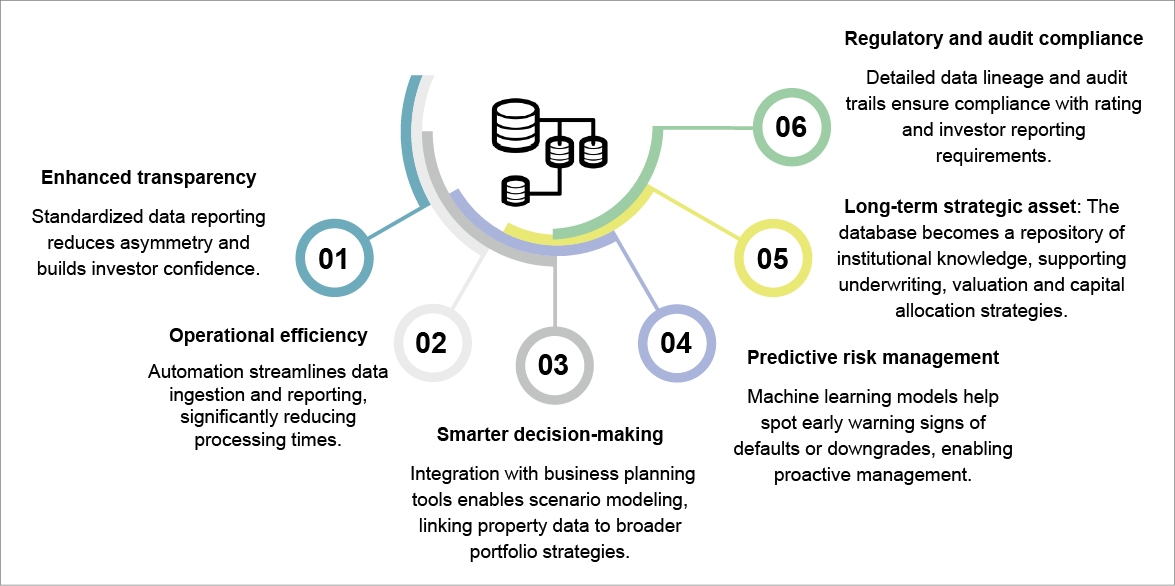
Benefits of building an SASB database: Building an SASB database is much more than meeting regulatory requirements as it helps create tangible value across the CRE value chain. Here are some of the key benefits:
Technology framework and reporting software
The core of any SASB database is a robust technology framework, designed to automate processes, scale efficiently and enable advanced analytics.
This framework consolidates complex data sources, making it actionable for various stakeholders across CRE investment and finance.
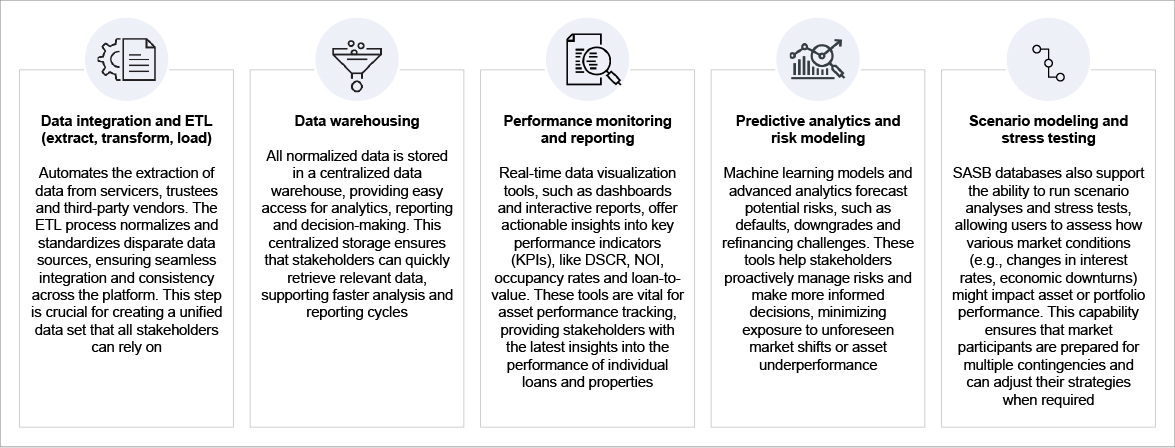
Key components of the tech stack of an SASB database include:
Turning information into actionable insights
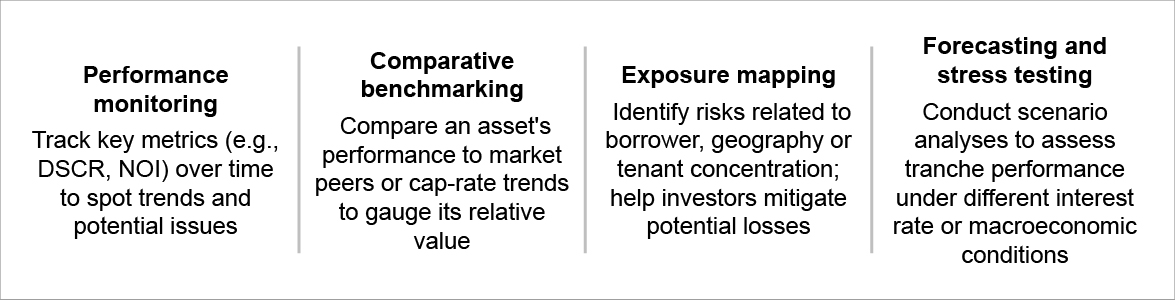
Data is valuable only when it is turned into insights. SASB databases support several key analytical use cases:
How investors use SASB data to optimize CRE investment strategies
The SASB database benefits a wide range of investors across the CRE capital markets ecosystem. Let’s explore some practical use cases to better understand its importance.
1. Pension funds: Enhancing risk-adjusted returns
Use case: Large pension funds typically manage massive portfolios that include CRE investments. These funds often face challenges in ensuring that they are taking on the right level of risk while maximizing returns over the long term.
How SASB databases help |
|
Example |
|
2. Hedge funds: Strategic asset management and market timing
Use case: Hedge funds focusing on real estate or credit strategies often look for high returns from CRE investments while managing risk through short-term market movements and trends. They frequently use sophisticated data models to time the market and identify undervalued assets.
How SASB databases help |
|
Example |
|
3. PE firms: Optimizing underwriting and due diligence
Use case: Private equity (PE) firms often engage in acquisitions of large, high-value properties or portfolios. These firms need to assess the long-term value and risk associated with potential investments while managing complex financing structures.
How SASB databases help |
|
Example |
|
4. REITs: Optimizing portfolio allocation
Use case: Real estate investment trusts (REITs) typically manage diverse portfolios of commercial properties and need to balance their exposure to different asset classes and geographic locations. They also need to make quick decisions based on the latest data and market developments.
How SASB databases help |
|
Example |
|
5. Insurance companies: Managing CRE exposure and compliance
Use case: Insurance companies often hold significant investments in real estate as part of their long-term asset management strategy. They also need to manage risk exposure and comply with regulatory reporting requirements.
How SASB databases help |
|
Example |
|
6. Commercial banks: Streamlining loan servicing and surveillance
Use case: Commercial banks that issue or service SASB loans use SASB databases to track the performance of large loans and manage loan portfolios effectively.
How SASB databases help |
|
Example |
|
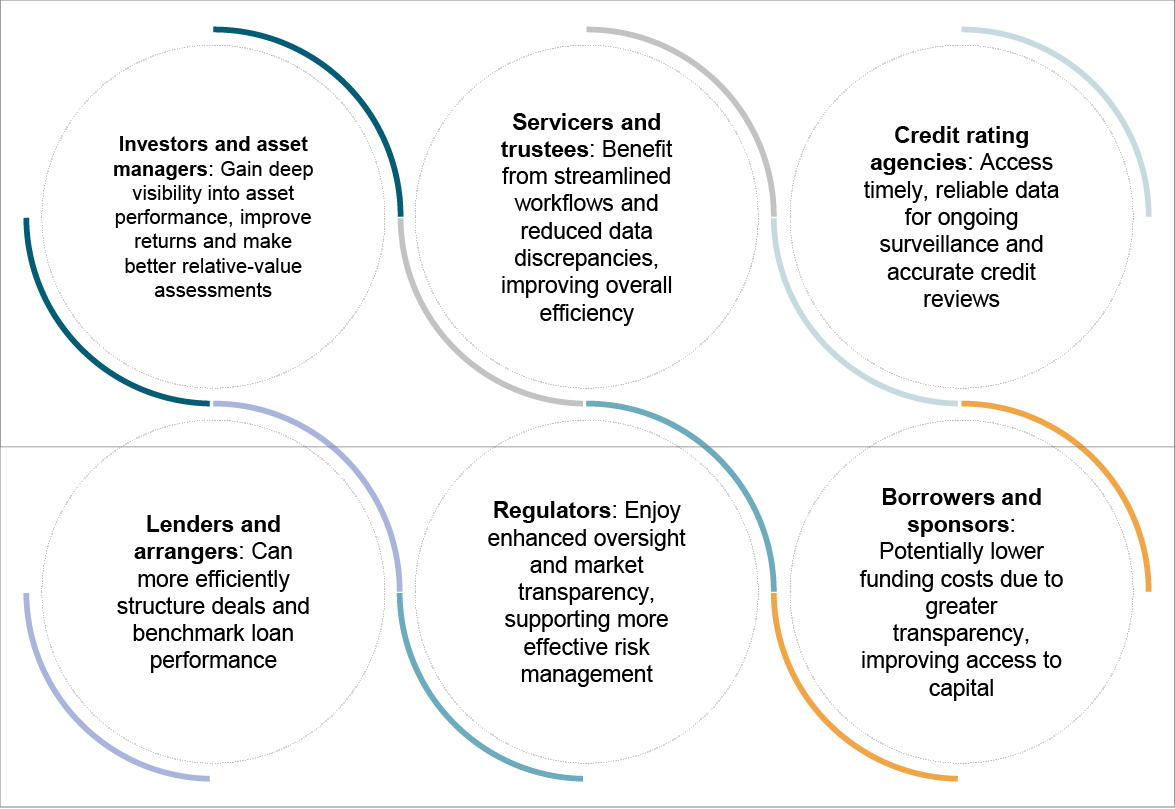
Ways stakeholders benefit
Rather than focusing on who benefits, let’s look at how the different stakeholders gain value from using an SASB database:
The role of credit rating agencies
Credit rating agencies (CRAs) play a crucial role in assessing the creditworthiness of SASB-backed securities. But their use of the data extends beyond just issuing ratings at origination. Here's how CRAs rely on SASB data throughout the lifecycle of a transaction:
- At origination: CRAs use historical performance data, property valuations and market trends to determine the credit enhancement needed for each tranche and to set loss assumptions
- Ongoing surveillance: After a CMBS is issued, CRAs continuously track the asset’s performance using real-time data updates, including occupancy rates, DSCR and property valuations. These data points help them maintain rating accuracy and provide investors with confidence in the stability of their investments
Conclusion
In today’s data-driven investment environment, an SASB database is not just a tool for reporting, it is also a strategic enabler.
By integrating high-quality data with advanced analytics, it transforms raw information into actionable insights. This not only improves decision-making and risk management but also fosters a more resilient and transparent CRE capital market.
A well-architected SASB database serves as the foundation for smarter, data-driven investments, which can shape the future of the CRE sector.
Related topics